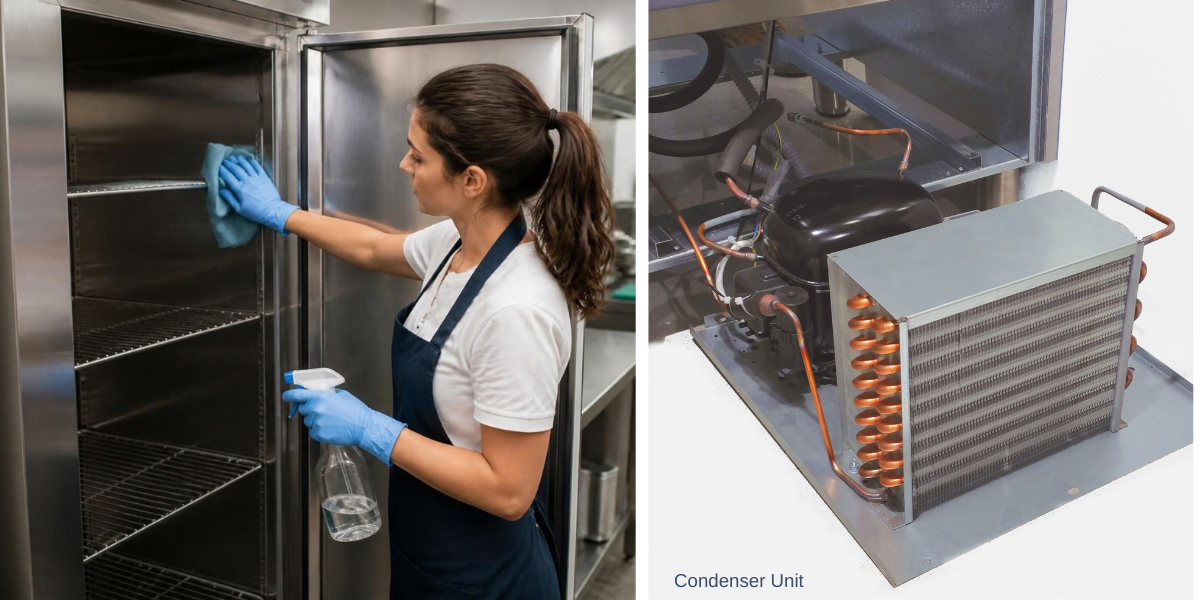
Refrigeration Health Check - Cleaning Commercial Refrigeration
As commercial refrigeration equipment is designed to preserve food and drink products, regular cleaning is essential to maintain hygiene, food safety and optimum performance.
Although appliances are thoroughly cleaned before leaving the factory, we recommend cleaning the interior before placing any food or drink products inside.
Cleaning the Interior and Exterior
Before Cleaning
For new equipment remove all packaging materials and debris.
For equipment already in use remove food products before cleaning and store them at a safe temperature during the cleaning process.
Ensure the controller is turned off prior to switching off the appliance.
Disconnect the power supply.
Cleaning Products
Do not use:
Solvents
Thinners
Abrasive cleaning products
Bleach or chlorine-based products
Do not use:
Water jets
Pressure washers or direct water sprays
Use warm water and a non-abrasive, neutral detergent suitable for food storage environments. Such as, pH-neutral, food-safe cleaners like mild dish soap solutions or a dedicated pH-neutral commercial fridge cleaning solution.
If in any doubt seek advice from your chemical cleaning supplier.
Cleaning Method
Use a soft cloth or sponge dampened with the cleaning solution.
Clean all internal and external surfaces.
Avoid saturating the cloth or sponge so that it does not allow water to enter electrical components.
Sanitising
Where sanitising is required, use a food-safe sanitiser approved for commercial food environments.
Do not use products that may affect the taste or smell of stored food.
Rinsing
Wipe all cleaned surfaces with a clean cloth or sponge dampened with fresh water
Recommended Cleaning Frequency
Clean the appliance at least once per week.
Increase cleaning frequency depending on the type of cabinet and the products being stored or displayed
Cleaning the Condenser
The condenser is a vital component of the refrigeration system. A clean condenser improves energy efficiency, reduces compressor workload and helps maintain correct storage temperatures.
If dust, grease or debris accumulates on the condenser, the appliance will operate less efficiently, increasing energy consumption and placing additional strain on the compressor.
Important: Failure to clean and maintain the condenser may affect the performance of the appliance and could invalidate the manufacturer's warranty. Therefore to maintain optimum performance, the condenser should be cleaned at least once every month.
Before Cleaning the Condenser
1. Switch off the appliance.
2. Disconnect the power supply.
3. Access the condenser as appropriate for your appliance:
Top-Mounted Units
Use a suitable step ladder to safely access the condenser located at the top of the appliance.
Refrigerated Counter, Display or Cabinets with Hinged Upper Panels
Refer to the manufacturers manual for access guidelines or contact Angel Refrigeration for further advice on support@angelrefrigeration.co.uk
Important: Take care not to displace wiring, switches or electrical components. Ensure no cables become trapped when reassembling panels.
Personal Protective Equipment (PPE)
Use of suitable PPE is recommended.
Cleaning Method
Use a vacuum cleaner fitted with a soft brush attachment, compressed air, or a dry brush to remove dust and debris from the condenser fins.
Always work in the direction of the fins to avoid damage.
An upholstery brush attachment is particularly effective.
For greasy deposits:
For light deposits use a non-abrasive degreasing cleaner suitable for commercial refrigeration equipment
Avoid flammable solvents and ensure adequate ventilation when cleaning.
If there is evidence of excessive greasy deposits contact Angel Refrigeration for advice or speak to your regular engineer for a professional clean.
After Cleaning
Refit all panels securely.
Reconnect the power supply.
Restart the appliance.
Check that the cabinet is operating correctly and has returned to the required storage temperature before reloading food or drink products.
Additional Compliance Information
Regular cleaning and maintenance help:
Maintain food hygiene standards.
Improve energy efficiency.
Extend equipment lifespan.
Reduce the risk of breakdowns.
Maintain correct product storage temperatures.
Any servicing,refrigerant handling or repairs involving the refrigeration system should onlybe carried out by appropriately qualified refrigeration engineers in accordancewith current UK F-Gas requirements.
Search www.refcom.org.uk to find an engineer in your area